In Part 1, we discussed the shitty canceling – the kind that’s out of laziness or a bit of self-absorption. However, there’s a whole other side to canceling that sucks just as much, only it sucks a lot for both people as opposed to just the one stuck at home. So here it is . . .
The Anxiety Factor

She’s thinking about the party she said she’d go to later.
Disclaimer: In this post I’m referring to people with light to mild anxiety that sometimes gets to them enough that they frequently find themselves canceling stuff. I’m not referring to people with severe anxiety, depression, agoraphobia, or any illness that prevents you from leaving the house. To those I say, I’m sending you lots of love and hope you get better soon, and you can just pass on reading the rest of this.
A lot of times in this modern era, when people talk about canceling, they are talking about the canceler and their anxiety. With certain mental illnesses, the idea of getting dressed and leaving your house is unbearable. On top of it, the thought of actually saying to someone that you can’t show up is a nightmare: You think they’re going to hate you, that they’ll never speak to you again, and probably the first part of this blog above convinced you further of that.
Here’s why I get that: I have generalized anxiety disorder as well. I have terrible anxiety, and while it’s under control now, there were times when I didn’t want to leave my house for weekends on end (I always could go to work, but hated going out). I completely understand the prevalence of articles reassuring those with GAD or just any kind of anxiety that they can take time for self-care, that if they need time alone that’s okay, etc. There are even a few articles about how to cancel properly when you’re particularly anxious.
But here’s the other side: People canceling on me made my anxiety a thousand times worse. Anxiety is all about stressing over the unknown, and when I have plans with someone, that’s something Known. Not only that, but typically when I made a choice to go out, it was because I knew I needed to. It was important to my mental health to get out of the house and spend time with friends. So a friend canceling on me was . . . really, really bad. I would become paranoid about how they really felt about me; I wouldn’t want to make plans with anyone, ever (of course that passed relatively quickly); I felt sort of stupid being all dressed up with nowhere to go; I was stuck at home for yet another night by myself, thinking all of these negative thoughts and making my whole situation way worse.
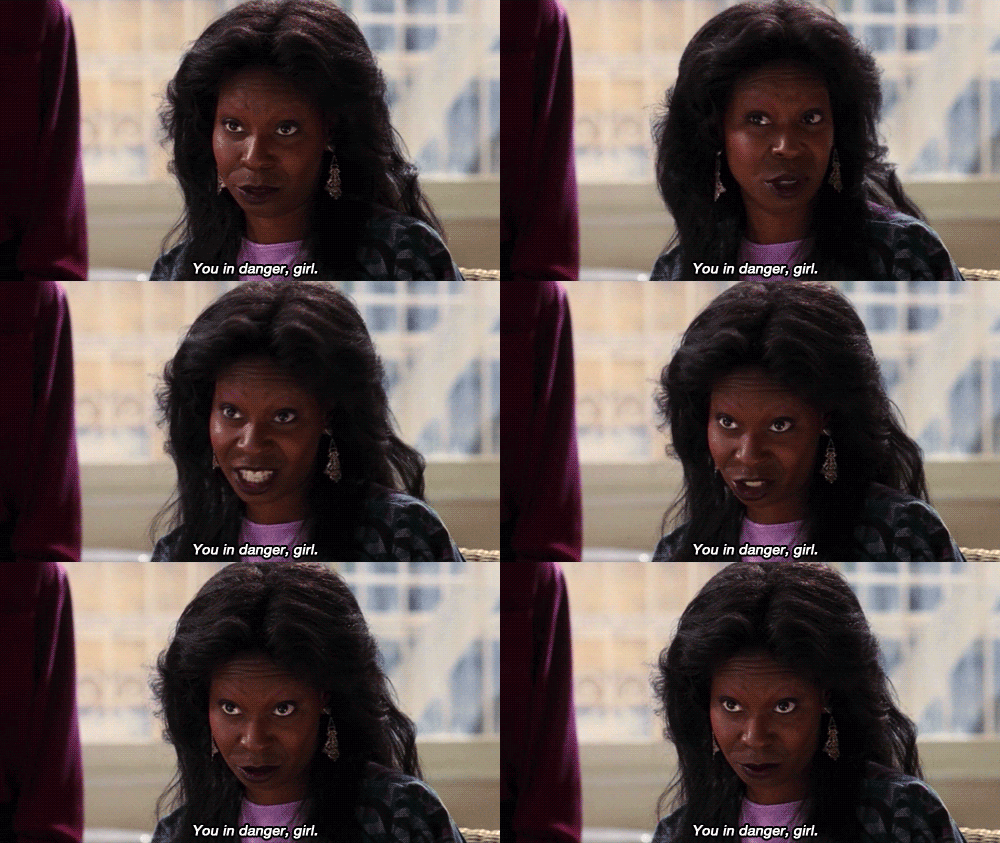
So, yes, I understand how hard it can be to get your butt out of the house when you feel like shit. And, yes you absolutely have the right to cancel sometimes because it’s all just too much. However, now that I’m on the other side (canceling just makes me incredibly annoyed, it doesn’t send me into a tailspin), I want to give you some tips about how to minimize the canceling. Because if you do it enough, people that love you will find themselves just not thinking of you when they’re making plans – and less friends equals less fun for the both of you, unless that person was a dick, in that case, cancel away! Keep in mind that the other person might be bummed enough to just quit the whole thing. Your nervousness about looking stupid or having no one to talk to is actually manifesting in another person; you’re subjecting a friend to that same thing you fear when you cancel on them. They’re out somewhere feeling sort of stupid being by themselves, with no one to talk to, or they’re stuck at home because they don’t want to go out alone. I stopped inviting more than one person to do stuff because it got to the point where I actually dreaded the actual event. I was filled with anxiety waiting for them to decide to show up. That’s ridiculous and not okay, no matter what your reason is for canceling.
A lot of people I know have at least one friend that does this as well, and has no problem saying it’s their anxiety. There may be a point though when you realize that it’s not so much anxiety, but rather feeling drained, overwhelmed, tired. That’s totally understandable – as is anxiety – but it doesn’t get rid of the poo feelings brought up when someone is canceled on. Friends should be understanding, absolutely, but they don’t always have to be – nor can they always be – accommodating. They simply do not have enough hours in the year to block out for someone they know that half the time, probably won’t show up. Also consider that while they may not have a diagnosed mental illness, they probably have a lot on their plate in other ways, and are juggling, too. There are absolutely ways to deal with this though, so here are some tips for both the Anxious Canceler and the Friend of the Anxious Canceler.
Some Tips for the Anxious Canceler

Use these for the actual invitation, attendance, and afterward:
- Give yourself adequate (and a relatively reasonable amount of) time to truly consider whether you will want to attend.
As I clarified above, a simple, “Let me check my schedule and get back to you on [specific day]” is not the same as someone “keeping their options open.” We all have a lot of stuff to take care of, this isn’t considered a weird request by any normal person. If someone makes you feel bad about it, fuck ’em. - Consider what’s going on the days before the event.
Do you have therapy that afternoon? Do you have a big project due the week before, or the week after? Is it your boyfriend’s (there he is again) parents’ 50th anniversary party? Part of gaining control over your anxiety is figuring out when it rises; having a busy week means you’ll probably want to veg out on the weekend and not go out. One giant social event that is Very Important means spending that emotional energy there as opposed to at a less important event. Consider how your mental state might be the day of. - Consider what the event actually is, and who it’s with, and how long it will take.
If you hate loud parties today, you will hate them next weekend. If the person inviting you is sort of a tool, they’re going to be a tool next weekend, too. If anxiety makes you drink too much and do stupid shit, that will be the same as well. All of this is okay, by the way. You don’t have to do anything you don’t want to or that isn’t good for you. You don’t have to go to every party, or any at all, or spend time with people who make you upset. But consider any upsides as well (not to convince yourself, simply to give the invitation a fair hearing): Maybe the host of the party sucks, but a friend you haven’t seen in awhile will be there. Maybe it’s not far from your house, and it’s just a two hour movie, and hey, you can be out for two hours! That’s nothing! Really weigh it, is all I’m saying. - Confirm when you said you will.
Easy-peasy; you said you’d let ’em know by Thursday, so remind yourself to let them know on Thursday. - Don’t be afraid to say you’re not coming.
You’ve done the work! You know you’re probably gonna cancel if you say yes, and you know what? Saying you can’t make it ahead of time is 1000x better than saying yes and then canceling. The person can invite someone else; they can go a different day; they can decide to go by themselves and hell, get a manicure on top of it! Yay! If it’s a big party, even less of a big deal. - If you do decide you’re going to do it, get excited – or at least neutral.
I think it was famous Twitterer Jonny Sun that said, “Start saying, ‘I get to . . .,’ instead of, ‘I have to . . .’.” A big symptom of anxiety is futuring: “It’s gonna be awful, I’m going to hate it, it’s going to take too long to get there, it’s going to be miserable weather,” etc., etc. If work gets crazy and you start to think, “Ugh, I shouldn’t have said I’m going to brunch,” change it to, “After this week, I’m really going to enjoy a mimosa,” or, “I sort of don’t want to go any more, but hey, apparently their western omelette is delicious.” - Allow yourself the “I don’t wanna go!” feelings, keeping in mind that you’re not going to indulge them.
You don’t have to want to do everything. Here’s a secret of people who don’t cancel, as a rule: We don’t want to do everything we agree to either! But, we recognize the commitment we made as more important than our feelings, or the feelings of our companions as just as important as our own, and decide it’s worth it to just grit out teeth and put up with a few hours of discomfort rather than flake out again. But having the “ew” feelings is totally fine – they’re nothing to feel guilty about. Feelings come and go, as they say; they don’t have to dictate your actions, and having power and control over your actions can help soothe anxiety in the long run. - If you really start to freak out, give a realistic time limit.
I touched on this above, but it bears repeating: Try thinking about how long this will take. Brunch probably won’t be more than two hours; you can make it two hours. A museum? Maybe three. Think of what you’ll say if the inviter wants you to do something after. A simple, “Oh, I’d love to, but this week really killed me, I’ve gotta get to my bed,” or even a little white lie about taking your cat out for a walk suffices. - Genuinely thank said person.
You don’t have to grovel, but especially if this is a person you’ve canceled on before, you want to make sure they know you appreciate their friendship and patience. Also, because you did your homework (right?) and determined that this was a type of event that you could handle, you want to sort of signal to them that this is what you like to do with them. Meaning, if you continuously don’t come to parties, eventually people won’t put you in the awkward position of declining and/or canceling the day of; if you say how much you loved one-on-one or small-group time somewhere quiet, they’ll keep you in mind in the future. - Return the favor.
In a few weeks (or however free time tends to work in your friend group), invite them out or over to your place for something. Again, they’ll get a sense that your friendship is important to them, and also reinforce the types of activities you like to do with them.
But . . . uh-oh! You did all of this and you still can’t bear it. You have to cancel.
Tips for the Anxious Canceler for When They Cancel

I just want to reiterate one last time that you should avoid this as much as possible, but if you have to do it, there are ways to sort of soften the blow and hopefully keep your relationships healthy.
- Understand that you actually have to say something.
I have experienced a number of cancellations that occur when . . . I just figured it out that they weren’t showing up. Never, ever do this, or wait until they text you wondering where you are. You must say something. The person you are canceling on is a human being, probably one that likes you a whole lot, and they deserve notification that the plans are off. On the logical side of things, you also don’t want people to think you’ve been murdered. That’s doubly rude – canceling and THEN the police sent to your house? Come on. - Let them know as soon as humanly possible.
Don’t keep this to the last minute; again, this is a person whose schedule you may have messed up. Imagine your friend doing her makeup, getting her nails done, whatever, because you’re basically her date for something. It’s super, super shitty to let someone do that and they end up all dressed up with nowhere to go. Also, maybe they can invite someone else with enough notice, or quickly come up with another, different way to spend their time. - Take the emotion out of it.
If you’re hyperventilating just thinking of that dreaded canceling text, I have a suggestion: Write a list of “canceling texts” in your phone’s Notes, and simply copy and paste an appropriate one when needed. Write these when you’re in a calm, neutral head space, because you’ll know exactly what to say without all that anxiety cluttering your brain. Now, I sincerely hope you’re not canceling enough to do this more than once every few months, but basically, you do the task you hate and that makes you anxious without having to think about it. Just copy, paste, send. The end. The following tips are for how those apologies should look and sound. - Always, always, always apologize.
You have to say, “I’m sorry.” There is no way around it. This is the type of situation for which the apology was created. You messed up – and you’re not evil, but you need to acknowledge it. I was friends with someone who not only constantly canceled, she never said she was sorry. Ever. In any way. It was so obvious, it had to be deliberate. We’re not friends any more. And not purely because she canceled – to be so utterly snotty as to think you don’t owe someone an apology for a quite simple and common breach makes someone question the type of person you are, as opposed to viewing as a minor annoyance or inconvenience. It shows you respect the person and acknowledge that you may have messed up their day. - Consider being up front about the reason.
If you’re canceling purely because of anxiety, frankly I’d go with a simple, “I’m not feeling well.” However, if you think the person would be receptive to it, there’s nothing wrong with saying, “I’m having a really bad anxiety attack, and I have to stay in.” Also consider that when you’re becoming close with someone, talking to them about your anxiety when you’re calm. Let them know you have this issue – of anxiety – and that sometimes it’s so overwhelming that you feel like you can’t leave the house. I would avoid going the “keeping options open” language though; try to not say something like, “I may cancel on you sometimes because I have bad anxiety.” Just like with the Keeping Options Open person, this type of statement forces the person you’re to whom you’re talking to accept and be okay with your crappy behavior, and that isn’t fair. - Check up with them the next week, preferably to make it up to them.
It’s your job in this situation to make it better if the person is upset about it. Depending on what you think they’re thinking, you can apologize again, or skip that and just invite them to something else. “Wanted to say sorry again for not making it Sunday. What are you doing next week? Maybe we can have dinner.”With this, though, do not make an offer you won’t follow through with. If you can only handle coffee, offer that; if you actually can’t offer anything, don’t offer anything. But a follow-up acknowledgement in any case lets someone know that you care, even if you just ask them, “How did the brunch go?” or “WAS that hot guy from your office at this party? Is he single?”
- Let it go.
We all fuck up. Okay. If you did the best you could, that’s all you can do. In the words of Queen Oprah, “When you know better, you do better.” Maybe the person gets super pissed and never speaks to you again. Hopefully, if you canceled and did all of the above, you feel relief. There’s literally nothing more you can do than the above. You did as well as you could under the circumstances. - Accept the outcome.
You did the best you could, but again, the other party is also a person with thoughts and feelings and baggage. If this is the 10th time you’ve canceled on them, they have every right to say, “Enough.” If it’s only the first time and they’re being a big dick about it, consider whether you have vastly different ideas of what you want out of the friendship. If there’s a crappy, friendship-losing outcome, it actually might not even be the canceling factor – though again, don’t do that. Maybe you’re just not compatible. I, for example, am extremely Type A (can you tell?) and have a hard time being friends with more breezy people. Though I will say, that I learn a lot from the breezy friends I do have! (And also, they probably have way more patience with me than I’ve ever had to have with them! Ha!) - At the end of the day, it’s just one crappy day.
What happens, happens, and you did the best you could.
Tips for Those with the Anxious Canceling Friend

You may have a friend who consistently cancels due to their anxiety. Or, you may have a friend who consistently cancels but you actually don’t know the reason. A decent rule of thumb as to figuring out whether it’s anxiety is the universality test: Meaning, if they cancel on everyone in the friend group from time to time, and they just in general seem to have a hard time being on time or showing up to everything, including work and family stuff, it probably has to do with either anxiety or a general personality trait. Especially if you can tell their canceling distresses them, try to have some patience. Here are some tips to keep these folks in your life, and both of you happy.
- Try to get a feel (or ask directly) how much notice they need for something, and how they liked to be asked.
Making last-minute decisions can freak people out, but at the same time, a lot of my personal anxiety has to do with perfectionism, and I actually procrastinate because I’m looking for the perfect time to do something. Isn’t that fucked up? Lol. Brains! Anyway: See if you can discern when the look of panic comes over your friend’s face when asked to do something. It may be more that they feel on the spot, and that they have to answer right away, or it may be that they genuinely don’t know if they can make it because it’s too early to tell BUT THEY NEED TO ANSWER SO YES?? IS YES THE CORRECT ANSWER?? - Email and text invites are way less pressuring than those done in person.
For obvious reasons. - Tell them when you expect them to figure it out.
Just like with the invitee, you can help this aspect too. “There’s a great play happening Saturday night, I’d love for you to come with! Let me know by Thursday so I can get tickets.” And then, of course, follow up when you say you will. - Give them room to say no.
Depending on how well you know your friend, you may be able to suggest to them, “Oh, I actually realized after I asked you that you’ve had a really hard time at work lately. I completely understand if you don’t think you’ll feel like going out.” If they do, in fact, want to go, it also is nice for an anxious person to reiterate, out loud, why this may actually be fun and not a nightmare. “I have had a hard time at work, but I think this play will be a nice escape.” - Be mindful of what they hate.
I told the Anxiouses above to signal (if not outright say) their preferred types of outings. Being a good friend to someone with anxiety is to not be a dick and repeatedly invite them to only the type of shit you like. If you’re a social butterfly and they hate crowds, ask them to come over and watch a movie for that one night every six months when you can’t stand the thought of talking to another douche at a party. It will happen. It’s also just kind to, again, not put the onus on another person constantly to have to evaluate whether it’s worth seeing you or not by putting themselves in a situation they despise. - If they cancel, you can be both annoyed and kind.
When they say they can’t make it, try to control yourself if you’re mad and just say, “Thanks for letting me know.” If they truly have anxiety, they already feel like crap. You’re also not a bad person for being annoyed. That’s allowed. - Consider gently speaking to them after they cancel.
If this is a habit, it’s worth pointing out once you’ve cooled off. Choose something specific about the cancellation that made it especially inconvenient, that also has an easy, actionable solution. For example: “I understand why you had to cancel last week. It’s just that it was especially hard because you only told me an hour before/I had bought the tickets/I double checked with you the day before.” If you just say you’re angry that they canceled, their response is going to be, “But I have anxiety!” and the conversation is over. Focus on what can actually improve – you can’t go back in time and force them to show up, and you can’t force them to never cancel again, but maybe you can give them something that would help the situation. Then, if it happens again, hopefully they can take the advice and be a bit better about how they cancel. - It’s okay to need a break – or cool down the friendship overall.
If someone constantly cancels on you – regardless of the reason – it’s okay to just consider them not a close friend. You’re not evil for wanting someone to show up when they say they will, and everyone has a breaking point. It can be a lot to have to basically find things to do that are easier for a person, or to basically schedule their lives for them, especially when they don’t seem receptive to it. There will be people in your life that this comes naturally – helping them through their stuff, whatever it may be – and there are those where you’re just not enough of a match. If someone isn’t really responding to your attempts at understanding (meaning, you’re not getting any closer and the problem isn’t getting better), they really just might not feel close enough to you to make the effort. You may decide that seeing them once a month, or only inviting them when it’s a small group so you still have people to hang out with if/when they flake, works best. - But, of course, don’t be mean and dramatic about it.
Always remember that it isn’t personal. There’s no need to write them a long letter or text message with how they’ve wronged you. Just . . . take it down a notch. Stay friendly and open, and if the canceler invites you somewhere, go! Enjoy your friendship as it happens to manifest, while keeping in mind that it isn’t your job to choreograph it. Maybe they’re not anxious and they just don’t like you! (lol, sorry, couldn’t resist.)
Manifest Cancelos

Yeah, so, that was my treatise on canceling. At the end of the day, we’re all guilty of it but we all could do a lot better. Understanding why people do it is a big part of being both supportive and finding our own limitations; determining our own limitations helps keep us sane and calm. I think if we all remember the ideas of respect, decency, and courtesy that are crucial to healthy relationships, we’re all going to be better.
Remember one last thing (whether you’re an anxious or Keeping Your Options Open or a Better Offer type of canceler):
The hurt/annoyance/anger people feel over canceling is not that they think you’re an awful person, but rather that it comes off as though you, the canceler, thinks poorly of the inviter. Most people believe that we don’t cancel on people we care about without good reason, so if they’re canceled on, they must be doing something wrong.
As nice as it would be for everyone to be able to see into our brains when we need them to – when we desperately want to explain ourselves – it isn’t possible. Instead, try to articulate yourself as best as possible, and do the olde ‘putting yourself in others’ shoes’ as well. This goes for whether you’re the Canceler or the Constantly Canceled On. And with that, be well and merry, kids!
 What the Hell is On My Face?
One Comment Add yours